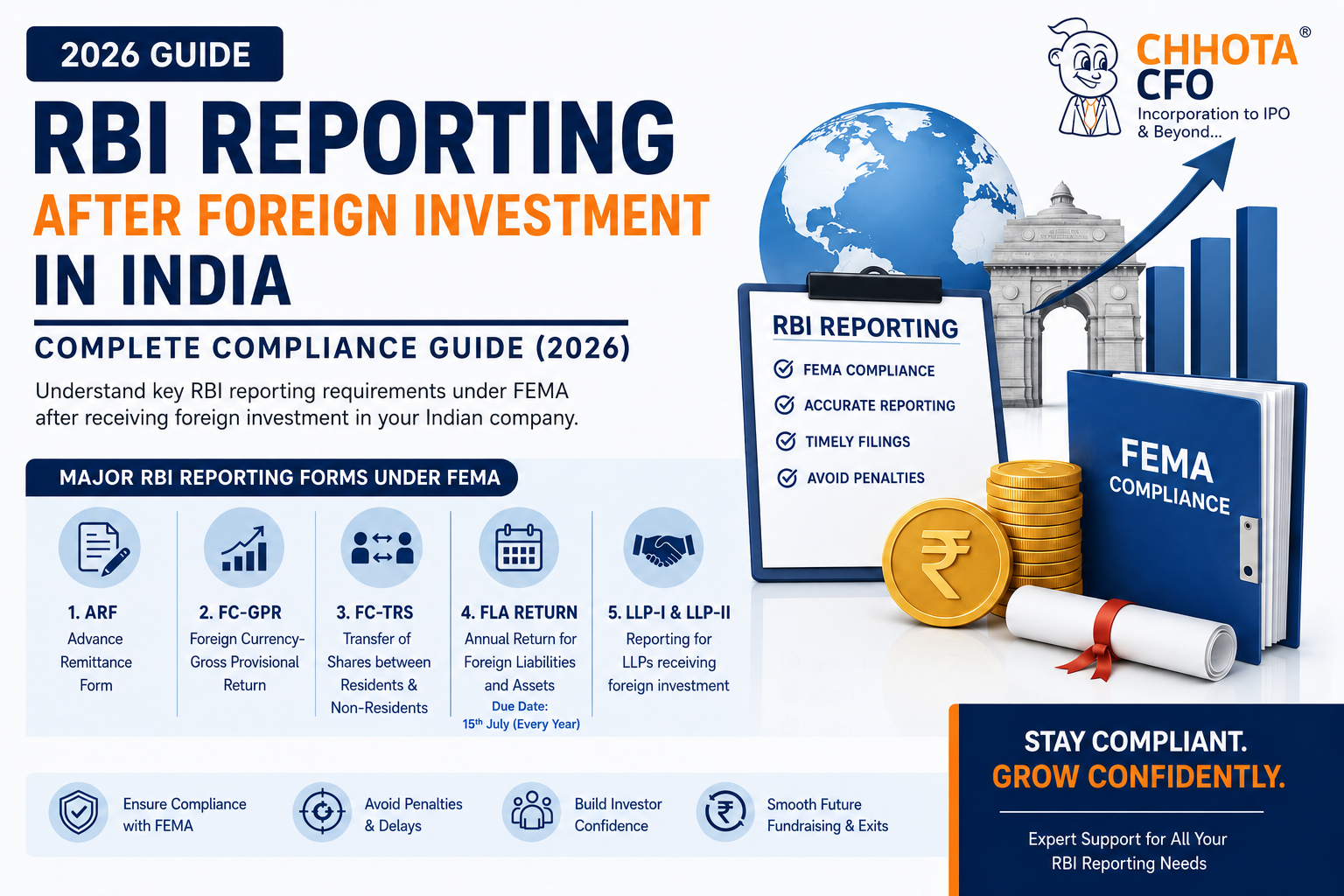
The complete RBI reporting requirements after receiving foreign investment in India, including FC-GPR, FC-TRS, FLA Return, and FEMA compliance for foreign-owned companies.
Foreign Direct Investment (FDI) has made India one of the most attractive investment destinations for global businesses. While receiving foreign investment is relatively straightforward under the Foreign Exchange Management Act, 1999 (FEMA), post-investment RBI reporting is mandatory. Many startups and companies inadvertently overlook these reporting obligations, leading to compounding penalties and compliance challenges.
This guide explains the key RBI reporting requirements applicable after foreign investment in an Indian company.
Need Expert Assistance with RBI Reporting After Foreign Investment?
Whenever an Indian company receives investment from a non-resident investor, it must comply with FEMA reporting requirements. RBI reporting ensures:
Failure to comply can attract penalties under FEMA and delay future investment rounds, mergers, acquisitions, or exits.
RBI reporting applies to:
Major RBI Reporting Forms Under FEMA
Historically, companies receiving foreign investment were required to file an advance remittance form upon receipt of funds. With the introduction of the RBI’s FIRMS portal and Single Master Form (SMF), the reporting process has been streamlined, and companies should follow the reporting workflow prescribed under the current RBI system.
When is FC-GPR applicable?
FC-GPR is required when an Indian company issues capital instruments to a non-resident investor against inward remittance or eligible non-cash consideration.
Common Transactions
When is FC-TRS applicable?
FC-TRS applies to the transfer of capital instruments between:
Examples include:
Companies that have received foreign investment or made overseas investment are generally required to file the Foreign Liabilities and Assets (FLA) Return annually with the RBI.
Due Date
Typically, the FLA return is due on or before 15 July each year, based on the previous financial year’s position.
Applicability
Applicable if the company has:
Where foreign investment is made in an LLP in sectors permitting FDI under the automatic route, specific reporting forms are required for:
Many companies face delays due to avoidable errors such as the following:
Non-compliance with FEMA reporting requirements may result in the following:
Receiving foreign investment is only the first step in establishing a successful cross-border business presence in India. Companies must also comply with RBI reporting obligations under FEMA by filing the appropriate forms within the prescribed timelines and maintaining accurate documentation.
Whether you are incorporating a wholly owned subsidiary, raising a venture capital round, or facilitating a secondary share transfer, timely FEMA compliance strengthens investor confidence, simplifies future fundraising, and minimizes regulatory risk.