Zero Turnover, Zero Business — Do You Still Need to File ROC Returns?

ROC filing requirements, compliance checklist, risks of non-filing, and options for inactive zero-turnover companies under Chhota CFO advisory.

No business does not mean no compliance.

A company may have zero turnover, no revenue, no employees, and no business activity, but if it continues to exist as a registered company, its statutory compliance obligations generally continue.

Need Help With ROC Compliance for Your Inactive Company?

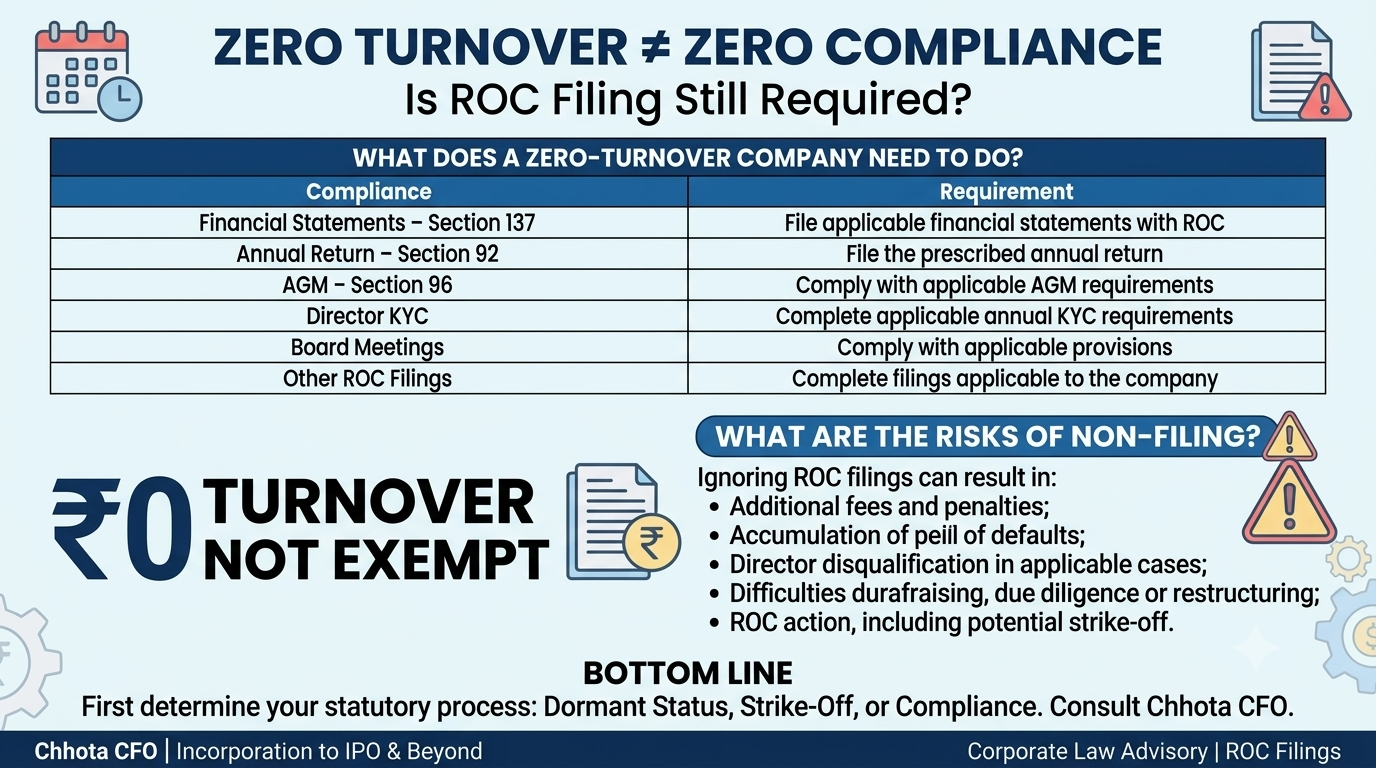
What Does a Zero-Turnover Company Need to Do?

Depending on the company’s status and applicability, it may still need to:

Compliance

Requirement

Financial Statements – Section 137

File applicable financial statements with ROC.

Annual Return – Section 92

File the prescribed annual return.

AGM – Section 96

Comply with applicable AGM requirements

Director KYC

Complete applicable annual KYC requirements.

Board Meetings

Comply with applicable provisions

Other ROC Filings

Complete filings applicable to the company

Zero Turnover ≠ Zero ROC Filing

Annual ROC filings are not determined solely by turnover.

Even if the company has

  • ₹0 revenue;
  • No sales;
  • No employees;
  • No business operations; and
  • Only incorporation or bank expenses,

It may still have annual filing obligations.

Get ROC Compliance Assistance

What If the Company Is Completely Inactive?

If the promoters do not intend to operate the company, they should consider the appropriate statutory route rather than simply stopping compliance.

Depending on the circumstances, the company may consider:

  1. Continue the company—maintain regular statutory compliance.
  2. Apply for Dormant Status—Where the company satisfies the prescribed conditions under Section 455.
  3. Consider Strike-Off—If the company is no longer required and meets the applicable conditions under Section 248.

What Happens If You Stop Filing?

Ignoring ROC filings can result in:

  • Additional fees and penalties;
  • Accumulation of multiple years of defaults;
  • Director disqualification in applicable cases;
  • Difficulties during fundraising, due diligence, or restructuring; and
  • ROC action, including potential strike-off.

The Bottom Line

0 turnover does not mean 0 compliance.

If your company has never started business or has become inactive, do not simply stop filing ROC returns. First, determine whether the company should continue, become dormant, or be closed through the appropriate statutory process.

Chhota CFO | Incorporation to IPO & Beyond

Corporate Compliance | ROC Filings | Corporate Law Advisory
Get professional support for ROC filings, annual compliance, dormant status, strike-off, and corporate compliance regularisation.

FAQ

Does a company with zero turnover need to file ROC returns?

Generally, yes. Zero turnover or no business activity does not automatically eliminate the applicable ROC filing obligations of a registered company.

Is ROC filing mandatory if a company has no business?

Generally, yes. A company that continues to exist as a registered company generally needs to comply with applicable statutory filing requirements even if it has no business activity.

Does a zero-turnover company need to file financial statements?

Yes, applicable financial statement filing requirements generally continue even where the company has no revenue or business activity.

Does a zero-turnover company need to file an annual return?

Yes, applicable annual return requirements generally continue based on the company's legal status and circumstances.

Does a company with no business need to hold an AGM?

Generally, applicable AGM requirements continue even when the company has no business activity, unless a specific exemption applies.

What ROC filings are required for a company with zero turnover?

Depending on the company and its circumstances, applicable compliance may include financial statements, annual returns, AGM-related compliance, Director KYC, Board-related requirements, and other ROC filings.

Can a company stop ROC filings if it has no revenue?

No. Simply stopping ROC filings because the company has no revenue can result in accumulated defaults, additional fees, and other regulatory consequences.

What happens if a company does not file ROC returns for several years?

Multiple years of non-compliance can result in accumulated filing defaults, additional financial exposure, director-level consequences in applicable cases, and possible ROC action.

Can an inactive company apply for dormant status?

A company that satisfies the applicable statutory conditions may consider applying for dormant status instead of simply abandoning its compliance obligations.

Can a company with zero turnover apply for strike-off?

If the company meets the applicable legal conditions, it may consider the appropriate strike-off process. Eligibility should be assessed before proceeding.

Does zero revenue mean zero compliance?

No. Zero revenue does not automatically mean zero statutory compliance.

What should I do if my company has missed ROC filings?

The company should first conduct a year-wise compliance review, identify pending filings and defaults, assess applicable consequences and then follow the appropriate regularisation process.
Book a Call with an expert absolutely FREE for 15 minutes