
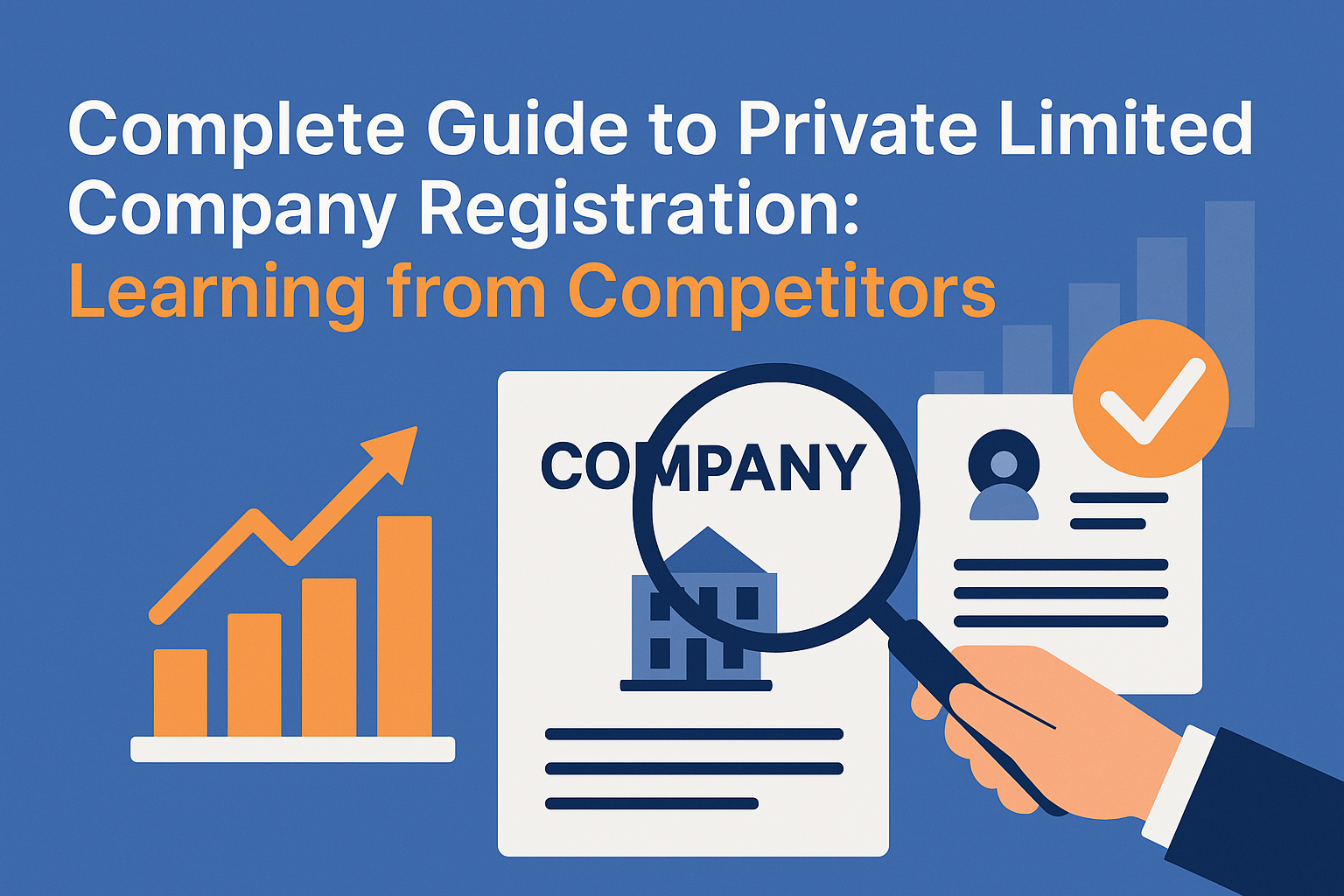
A private limited company is one of the most trusted business structures for startups and growing businesses in India. It provides legal security, better credibility, and long-term growth benefits.
Many entrepreneurs find the registration process confusing due to the legal terms and multiple steps involved. This guide explains private limited company registration clearly and straightforwardly, helping you avoid mistakes and register smoothly.
A private limited company is a separate legal entity created under company law. It exists independently of its owners and offers protection to shareholders.
This structure is widely used because it balances control, safety, and scalability, making it suitable for both new and established businesses.
A private limited company is registered under the Companies Act, 2013 and is governed by specific legal rules. It has its own legal identity and operates separately from its founders.
The structure defines how the company is owned, managed, and controlled.
Private limited companies have built-in features that support business stability and growth. These features help protect owners and ensure smooth operations.
They also provide flexibility in ownership and management.
Private limited companies differ from sole proprietorships and partnerships in many ways. They offer better legal protection and more growth opportunities.
Although compliance is higher, the long-term benefits make this structure attractive.
Registering a private limited company requires fulfilling specific legal and documentation requirements. These ensure the company operates lawfully from the beginning.
Proper compliance during registration helps avoid rejection and future legal issues.
Documents are required to verify the identity of directors and the company’s registered address. These documents form the legal base of the company.
Submitting accurate, up-to-date documents is very important.
After incorporation, companies must complete mandatory compliance steps. These steps confirm that the company is active and operational.
Failure to complete these tasks may lead to penalties.
Company registration rules vary by country and state. The chosen jurisdiction affects taxation, ownership rules, and compliance.
Understanding local laws helps in better planning.
Private limited company registration follows a structured process. Completing each step correctly ensures faster approval and fewer errors.
Following the correct order is essential to avoid delays.
Preparation before filing saves time and prevents rejection. All required documents should be ready in advance.
This stage sets the foundation for smooth registration.
Choosing a unique and valid company name is a key step. The name must comply with government rules and must not match any existing companies.
Name approval is usually time-bound.
This step legally creates the company. Once approved, the company becomes a registered legal entity.
The incorporation certificate confirms the company’s existence.
After incorporation, companies must complete certain activities to begin operations. These ensure legal and financial readiness.
Missing these steps may lead to penalties.
Successful companies follow proven strategies during registration and early growth. Learning from competitors helps avoid costly mistakes.
These insights help new businesses build a strong foundation.
Leading companies focus on strong leadership and clear planning. They maintain compliance and adapt to market changes.
Customer satisfaction and financial discipline are also key factors.
Modern companies use technology to simplify registration and compliance. Digital tools reduce errors and processing time.
Automation improves efficiency and transparency.
Many well-known companies started as private limited firms. Their structure helped them raise funds and grow quickly.
These examples show the long-term value of this structure.
Private limited company registration offers legal, financial, and operational advantages. These benefits support long-term business growth.
This structure is suitable for businesses planning expansion.
Limited liability protects personal assets from business losses. Owners are only responsible for their investment amount.
This reduces personal financial risk.
A registered company appears more professional and reliable. It builds trust with clients, banks, and investors. This improves market reputation.
Private limited companies can raise funds more easily. Investors prefer this structure due to transparency and legal protection.
This supports faster business growth.
This structure allows better tax planning. Companies can optimise tax through salaries, dividends, and deductions.
Tax savings can be reinvested into the business.
Many businesses face problems due to avoidable mistakes. Understanding these pitfalls helps save time and money.
Proper planning reduces risks.
Errors in documents often lead to rejection or delays. Careful review is essential before submission.
Even small mistakes can cause issues.
Failing to comply after registration is a common mistake. Many businesses assume work ends after incorporation.
This can result in heavy penalties.
Wrong decisions during registration affect long-term growth. Strategic planning is essential from the start.
Early mistakes are difficult to correct later.
Experienced entrepreneurs follow best practices to ensure smooth registration and compliance. These practices help businesses grow sustainably.
Learning from leaders reduces trial-and-error.
Efficient registration saves time and reduces stress. Digital tools and expert support improve accuracy.
Professional help prevents legal mistakes.
Important decisions during registration shape the future of the business. These decisions must be made carefully.
They affect funding, control, and operations.
Ongoing compliance ensures stability and trust. Companies must regularly track and follow legal updates.
Technology helps manage compliance efficiently.
Private limited company registration is a strong foundation for business success. It offers legal protection, credibility, and growth opportunities.
Businesses that plan carefully and maintain compliance perform better in the long run. With the right approach, private limited company registration becomes a decisive step toward sustainable growth.
[1] – Cleartax In
[2] – Wolterskluwer
[3] – Legalwiz In
[4] – Vakilsearch
[5] – Servcorp
[6] – Cleartax In
[7] – Werlegal
[8] – Rapidformations
[9] – Cleardocs_
[10] – En Wikipedia
[11] – Confiduss
[12] – Legal500
[13] – Mca
[14] – Corp Delaware Gov
[15] – Sos Ca Gov
[16] – Cleartax In
[17] – Northwestregisteredagent
[18] – Ncsbc
[19] – Legal Thomsonreuters
[20] – Hdfcbank
[21] – Maheshwariandco
[22] – Setindiabiz
[23] – Lawcoursespro Ebclearning
[24] – Businessmitra
[25] – Kanakkupillai
[26] – Kanakkupillai
[27] – Legalsuvidha
[28] – Indiafilings
[29] – Legalvision
[30] – Wolterskluwer
[31] – Companiesmadesimple
[32] – Indiafilings
[33] – Camanojkumar
[34] – Vakilkaro
[35] – Raaas
[36] – Startup Movers
[37] – Companysuggestion
[38] – Wolterskluwer
[39] – Akgvg
[40] – Winsavvy
[41] – Vjmglobal
[42] – Setindiabiz
[43] – Legaljini
[44] – Margcompusoft
[45] – Legalwiz In
 GST Input Tax Credit (ITC) Guide for Startups & MSMEs (2026)
 Audit Red Flags in Due Diligence: Investor Guide (2026)
 IEM Registration Part A vs Part B under DPIIT | Complete Guide
 RBI Reporting After Foreign Investment in India | FEMA Guide 2026
 Sections 185, 186 & 188 of Companies Act, 2013: Complete Guide
 Missed a FEMA Filing? Compounding vs Late Submission: What Should You Do?
 MCA Financial Year Flexibility Comes with a Tax Reporting Catch for Companies
 Fast Track Merger without NCLT approval
 Trademark Registration Bangalore: Fees, Eligibility & Steps
 Section 185 vs Section 186: Company Loan Rules Explained

