

A demerger is essentially the opposite of a merger. It involves a company separating one of its business units or divisions, either to sell it, liquidate it, or establish it as an independent legal entity. While it may resemble a divestiture or de-acquisition, a demerger is a broader concept that can take various forms. Some demergers do result in a sale, but others are driven by strategic goals like streamlining operations or unlocking value.
A demerger refers to the transfer of one or more undertakings of a company to another company, either existing or newly formed, such that the shareholders of the original company retain a proportional stake in the demerged entity.
In India, the Income Tax Act, 1961 (Section 2(19AA)) and Companies Act, 2013 (Sections 230–232) define and govern demergers.
1. Focus on Core Business
2. Unlocking Shareholder Value
3. Regulatory or Legal Requirement
4. Operational Efficiency
5. Strategic Restructuring
6. Independent Fundraising and Listing
7. Succession Planning or Family Settlement
8. Exit or Sale Preparation

Type of Demerger | Definition | Shareholding Impact | Legal Route | Example / Note |
1. Spin-Off | Business unit becomes a separate independent entity | Shareholders of parent get proportional shares in new entity | Companies Act (Sec 230–232) or Board approval | Infosys → Edge Verve |
2. Split-Off | Shareholders exchange parent shares for new company shares | Only opting shareholders get shares in the new entity | Scheme of Arrangement | Grasim Industries Ltd. v. Aditya Birla Capital Ltd. (2017) (Used to reduce parent’s shareholder base) |
3. Split-Up | Parent dissolves; two or more companies formed | Parent ceases to exist; shareholders get shares in new companies | Companies Act (Sec 230–232) | Reliance Industries Ltd. (2005) (Complete corporate break-up) |
4. Equity Carve-Out | IPO of a subsidiary; parent sells minority stake | Parent retains control; public gets stake | SEBI, Companies Act, Stock Exchange Rules | LIC IPO (Govt retained majority stake) |
5. Divestiture | Business sold to another company | No shares issued to existing shareholders | Contractual Sale / Slump Sale | Tata Motors – Sale of Passenger Vehicle Business to Tata Motors Passenger Vehicles Limited (TMPV) (2022) (Strategic or distress sale) |
Case: Infosys Ltd. → EdgeVerve Systems Ltd.

Case: Grasim Industries Ltd. v. Aditya Birla Capital Ltd. (2017)
Case: Reliance Industries Ltd. (2005)
Case: Life Insurance Corporation of India (LIC) IPO (2022)
Case: Tata Motors – Sale of Passenger Vehicle Business to Tata Motors Passenger Vehicles Limited (TMPV) (2022)
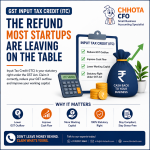 GST Input Tax Credit (ITC) Guide for Startups & MSMEs (2026)
 Audit Red Flags in Due Diligence: Investor Guide (2026)
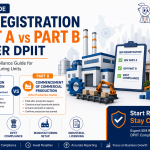 IEM Registration Part A vs Part B under DPIIT | Complete Guide
 RBI Reporting After Foreign Investment in India | FEMA Guide 2026
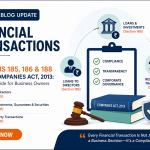 Sections 185, 186 & 188 of Companies Act, 2013: Complete Guide
 Missed a FEMA Filing? Compounding vs Late Submission: What Should You Do?
 MCA Financial Year Flexibility Comes with a Tax Reporting Catch for Companies
 Fast Track Merger without NCLT approval
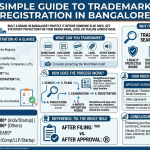 Trademark Registration Bangalore: Fees, Eligibility & Steps
 Section 185 vs Section 186: Company Loan Rules Explained

