

Share certificates are vital in corporate governance, providing evidence of share ownership for shareholders to assert their rights and receive dividends. Yet, when certificates are lost, obtaining duplicates becomes imperative, regulated by stringent company laws and procedural guidelines. The issuance of duplicate share certificate is a crucial component of corporate governance within any company. These certificates act as tangible evidence of share ownership, facilitating shareholders’ ability to exercise their rights and receive dividends. However, instances of lost or misplaced certificates can pose challenges for both shareholders and the company alike. In such cases, shareholders must steer a regulated process, governed by the Companies Act, to obtain replacement certificates. This process involves specific procedures aimed at maintaining transparency and the integrity of the share registry.
Here are some relevant sections and rules related to the issue of duplicate share certificates:
Other Relevant Sections
Section 9 of the Indian Stamp Act, 1899: This section requires an indemnity bond to be stamped.
Losing or misplacing a share certificate can be a stressful experience, especially if you’re unsure of how to obtain a replacement. Fortunately, companies can issue duplicate share certificates to replace lost, stolen, or damaged originals.
The company may charge a fee for issuing a duplicate share certificate, which varies depending on the company’s policy
In case unlisted companies, the duplicate share certificates shall be issued within a period of three months and in case of listed companies such certificate shall be issued within forty-five days, from the date of submission of complete documents with the company respectively.
Obtaining a duplicate share certificate is a straightforward process that involves notifying the company, filing an FIR, executing an affidavit and indemnity bond, and submitting an application. By following these steps and providing the required documents, you can obtain a duplicate share certificate and ensure that your shareholding is protected.
 GST Input Tax Credit (ITC) Guide for Startups & MSMEs (2026)
 Audit Red Flags in Due Diligence: Investor Guide (2026)
 IEM Registration Part A vs Part B under DPIIT | Complete Guide
 RBI Reporting After Foreign Investment in India | FEMA Guide 2026
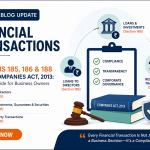 Sections 185, 186 & 188 of Companies Act, 2013: Complete Guide
 Missed a FEMA Filing? Compounding vs Late Submission: What Should You Do?
 MCA Financial Year Flexibility Comes with a Tax Reporting Catch for Companies
 Fast Track Merger without NCLT approval
 Trademark Registration Bangalore: Fees, Eligibility & Steps
 Section 185 vs Section 186: Company Loan Rules Explained

