
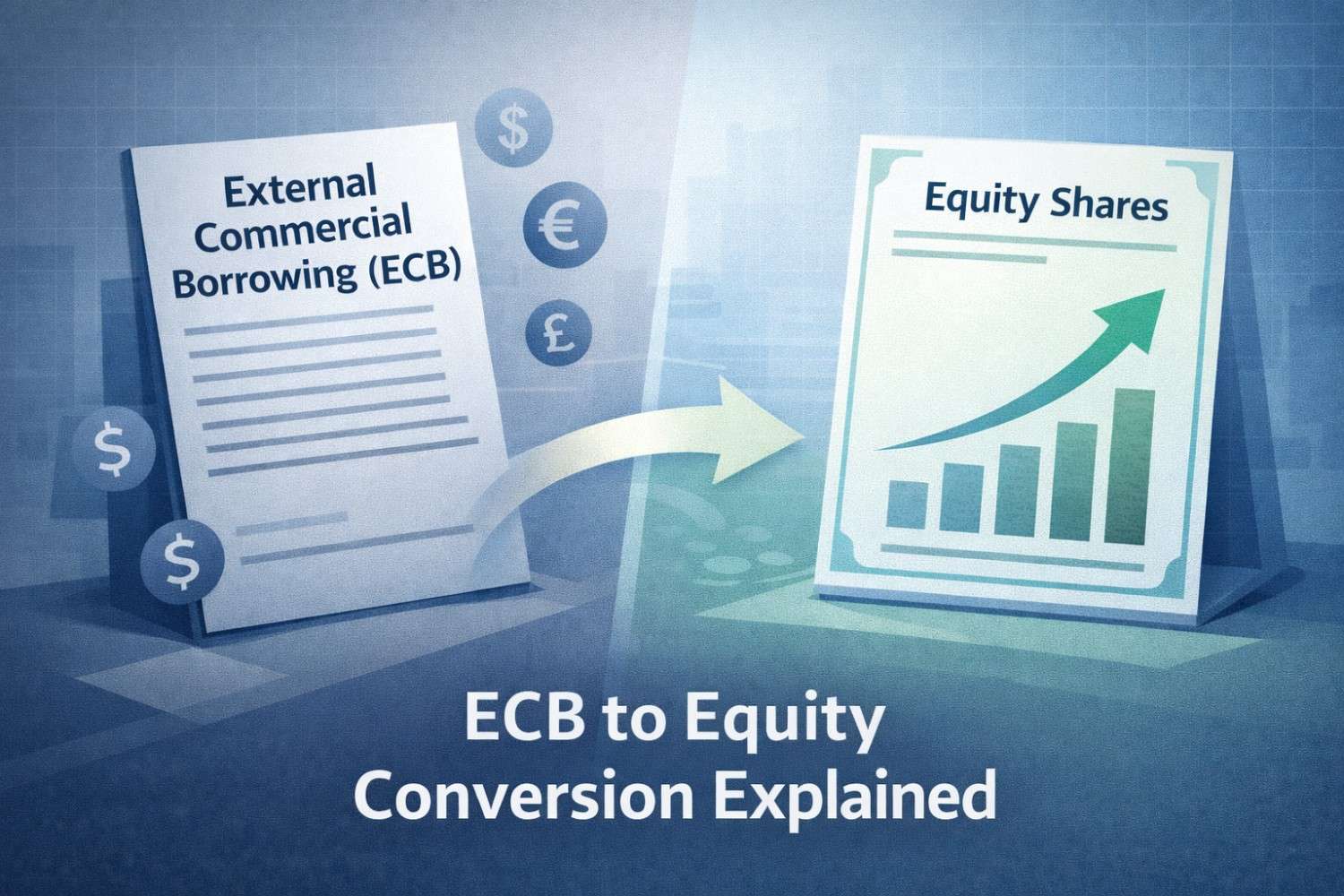
Many Indian companies sometimes borrow money from foreign lenders. Paying back this money can be hard when interest rates are high or cash is low. One option is to convert the loan into company shares, so the lender becomes a part-owner instead of a creditor. This can save money and strengthen the company.
ECB-to-equity conversion is a way to turn foreign loans into ownership. It improves finances but can change who controls the company.
This means a company gives shares to a foreign lender instead of repaying the loan or interest. The lender stops being a creditor and becomes a shareholder, sharing in profits and growth.
Companies use this when paying cash is difficult. It saves money, reduces debt, and aligns the lender’s goals with the company’s.
ECB conversion is legal but must follow strict rules. Breaking them can cause penalties. Companies must comply with multiple laws simultaneously.
Before conversion, companies must get approvals and file documents. This avoids legal or financial problems.
ECB conversion affects company finances and ownership. Companies need to plan carefully to avoid conflicts.
Proper accounting is needed for transparency and audits.
ECB conversion may have tax consequences, especially if interest is converted into shares.
Conversion has benefits but also risks. Companies must weigh them before proceeding.
Yes, it works for startups and growth companies. It helps manage debt and prepare for future funding.
Converting External Commercial Borrowings into equity helps Indian companies reduce loan burden and save cash. Instead of paying back the loan, the company issues shares, thereby improving its financial strength.
This also turns the foreign lender into a business partner. As a shareholder, the lender benefits when the company grows, not from regular loan payments.
But this step must be planned carefully. It affects company ownership, control, and legal rules, so FEMA, RBI, and FDI guidelines must be followed.
If done correctly, ECB-to-equity conversion can be a good option for Indian companies. It supports long-term growth and makes the company financially stable.
 GST Input Tax Credit (ITC) Guide for Startups & MSMEs (2026)
 Audit Red Flags in Due Diligence: Investor Guide (2026)
 IEM Registration Part A vs Part B under DPIIT | Complete Guide
 RBI Reporting After Foreign Investment in India | FEMA Guide 2026
 Sections 185, 186 & 188 of Companies Act, 2013: Complete Guide
 Missed a FEMA Filing? Compounding vs Late Submission: What Should You Do?
 MCA Financial Year Flexibility Comes with a Tax Reporting Catch for Companies
 Fast Track Merger without NCLT approval
 Trademark Registration Bangalore: Fees, Eligibility & Steps
 Section 185 vs Section 186: Company Loan Rules Explained

