India has over 6.3 crore MSMEs. They add about 30% to GDP. They employ over 11 crore people.
Studies show most MSME owners overpay income tax. They don’t know about dozens of legal deductions. These come from the Income Tax Act, 1961.
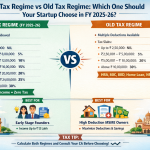
If you run an MSME or startup, file under the Old Tax Regime. We recommend it for owners with big expenses and investments.
Here is your key checklist. It lists 20 deductions. They could save you INR 200,000 to INR 1,000,000 in taxes this year.

Why MSME Owners Must Focus on Tax Deductions
For businesses operating in cities like Bengaluru, Mumbai, Pune, and Ahmedabad, tax efficiency directly impacts profitability.
Proper use of deductions can help you:
- Reduce taxable income legally
- Improve cash flow
- Reinvest savings into business growth
Personal Tax Deductions Every Business Owner Can Claim
1. Section 80C – Core Investment Deduction
Claim the top deduction every year. It covers investments and expenses. Maximize it without fail.
Key items you can claim:
- EPF investments.
- PPF accounts.
- ELSS mutual funds.
- NSC bonds.
- 5-year fixed deposits.
- Sukanya Samriddhi scheme.
- Life insurance premiums.
- Home loan principal repayment.
- Children’s tuition fees.
2. Section 80CCD(1B) – Extra NPS Benefit
Get an extra ₹50,000 deduction. It is for NPS contributions.
Key points:
- This is over and above the 80C limit.
- Claim it on top of other investments.
3. Section 80D – Health Insurance
Claim deductions on health insurance premiums.
Key points:
- Self and family: INR 25,000 (or INR 50,000 if a senior citizen).
- Parents: Extra INR 25,000 to INR 50,000.
- Total max: INR 100,000.
- Premiums rise 12-18% yearly in India. This deduction grows in value.
4. Section 80E – Education Loan Interest
Deduct full interest on education loans.
Key points:
- For you or your child.
- Loan from bank or financial institution.
- No upper limit.
- Claim for up to 8 years.
- Great for MSME owners funding higher education in India or abroad.
5. Section 80EEA – Affordable Housing Benefit
Extra deduction for first-time home buyers.
Key points:
- Loan sanctioned: April 1, 2019, to March 31, 2022.
- Property stamp value: Below INR 45 lakhs.
- Extra INR 150,000 deduction.
- Beyond the Section 24b limit.
Business Expense Deductions for MSMEs
6. Section 32 – Depreciation on Assets
Claim depreciation on business assets.
Key points:
- Covers plants, machinery, computers, vehicles, and furniture.
- Rates: Computers 40%, furniture 10%, plant/machinery 15%.
- First year, under 180 days of use: 50% of rate.
- Example: INR 30 lakhs of machinery = INR 4.5 lakhs deduction in Year 1.
7. Section 32AC / 32AD – Investment Allowance for Manufacturing
Extra deduction for manufacturing MSMEs.
Key points:
- 15% on new plant and machinery investments.
- Section 32AC: Over INR 25 crores in a year.
- Section 32AD: In notified backward areas.
- Plus normal depreciation.
8. Section 35D – Startup Setup Costs
Amortize new business setup costs.
Key points:
- Covers incorporation fees, legal costs, feasibility studies, and prospectus printing.
- Spread over 5 years at 20% per year.
- Example: INR 5 lakhs spent = INR 1 lakh deduction each year for 5 years.
9. Section 37(1) – Daily Business Expenses
Deduct all business costs under Section 37(1).
Key points:
- Must be wholly for business.
- It includes travel, professional fees, ads, and marketing.
- Also software, office rent, and utilities.
- Tip: Keep bills and receipts. MSMEs often miss claims.
10. Section 80JJAA – Hiring Benefit
Big deduction for hiring new staff.
Key points:
- For growing MSMEs.
- New employees paid over INR 25,000/month.
- Work over 240 days/year.
- Claim 30% of extra employee costs.
- For 3 years.
- Example: 20 employees at INR 4 lakhs/year each = INR 24 lakhs deduction per year.
11. Section 80IC / 80IE – Regional Tax Benefits
Tax break for new units in key areas.
Key points:
- For manufacturing or eligible businesses.
- Locations: Himachal Pradesh, Uttarakhand, and Northeast states.
- Up to 100% income tax deduction.
- Lasts 5 to 10 years.
- Many local entrepreneurs miss it.
Interest & Financial Deductions
12. Section 24(b) – Home Loan Interest
Deduct home loan interest.
Key points:
- Self-occupied property: Up to INR 200,000/year.
- Let-out property: Full interest (with loss limits).
- Example: 9% on a INR 50 lakh loan = INR 4.5 lakh interest. INR 2 lakhs tax-free.
13. Bad Debts Deduction
Write off uncollectable debts.
Key points:
- Customer debt you tried to recover.
- Claim it as a business deduction.
- Must have taxed it as income before.
- Keep proof of recovery efforts.
Startup & Advanced Tax Saving Opportunities
14. Section 80IAC – Startup Tax Holiday
Full tax exemption for eligible startups.
Key points:
- DPIIT-recognized startups.
- Incorporated after April 1, 2016.
- 100% tax-free for any 3 years in the first 10.
- Apply at startupindia.gov.in if eligible.
15. Section 80G – Donations
Deduct donations to charities.
Key points:
- To approved trusts and funds.
- 50% or 100% of the amount is deductible.
- Examples: PM CARES, National Relief Fund, registered NGOs.
- Meets CSR goals too.
16. Section 10(14) – Salary Structuring
Use tax-free perks in employee pay.
Key points:
- For private limited startups.
- Meal coupons: Up to INR 3,000/month tax-free per employee.
- Transport and uniform allowances too.
- Cuts taxable salary.
- Lowers employer PF costs.
17. R&D Deductions (Section 35)
Big deductions for research costs.
Key points:
- Eligible sectors: pharma, biotech, agritech, and manufacturing.
- 100% to 150% weighted deduction.
- Get pre-approval from DSIR.
- Use a CA for help.
18. Section 43B – Pay Before Claim
Deduct only when you pay.
Key points:
- Covers taxes, duties.
- Employee PF/ESI contributions.
- Bonus: interest on govt loans.
- Pay by March 31 to claim that year.
19. HUF Tax Planning Strategy
Use HUF to cut family taxes.
Key points:
- For Hindu Undivided Families.
- Create HUF entity.
- Transfer property or assets.
- HUF gets its own INR 250,000 exemption.
- Own INR 150,000 80C limit.
- Saves INR 50,000 to INR 300,000/year.
20. Carry Forward Business Losses
Save losses for future tax cuts.
Key points:
- FY 2024-25 losses carry forward 8 years.
- Set off against future business profits.
- File ITR on time to keep this.
- Late filing loses carry-forward (depreciation ok).
Conclusion – Turn Tax Planning into Profit Strategy
Save past losses to cut future taxes.
Key points:
- FY 2024-25 losses carry forward 8 years.
- Use against future business profits.
- File ITR on time.
- Late filing loses it (depreciation ok).